What Are The Role of Environmental Impact Assessment (EIA) Reports in Oil & Gas Projects

The Critical Role of Environmental Impact Assessment (EIA) Reports in Oil & Gas Projects


Oil and gas projects bring significant economic benefits—but they also pose serious risks to the environment, local communities, and long-term sustainability. That’s why Environmental Impact Assessment (EIA) reports play a vital role before any project begins. In fact, an EIA is often a legal requirement in many countries and a key expectation from international investors, regulators, and stakeholders.

Below is a clear breakdown of why EIAs are essential in the oil and gas sector and how they support responsible project development.


1. Ensuring Environmental Protection

Oil and gas activities—exploration, drilling, production, transportation—can affect air quality, water resources, soil, biodiversity, and marine life.
An EIA identifies these potential impacts before any equipment touches the ground. It allows companies to:

  • Map sensitive habitats and ecosystems.
  • Predict pollution risks
  • Identify species and natural resources at risk.
  • Develop mitigation strategies to minimize environmental damage

By doing this early, companies avoid irreversible harm and reduce future operational and legal risks.

2. Supporting Regulatory Approvals

Most governments require an EIA before issuing permits for oil and gas projects.
A well-prepared EIA helps companies:

  • Demonstrate environmental responsibility
  • Comply with national laws and international environmental standards.
  • Gain approval from ministries, environmental agencies, and energy regulators.

In regions such as Iraq, the UAE, and other oil-producing countries, the EIA is a mandatory document required before project commencement.

3. Safeguarding Community Health and Safety

Oil and gas operations can affect nearby communities through:

  • Noise pollution
  • Waste and effluent discharge
  • Air emissions
  • Groundwater and surface water contamination
  • Traffic impacts

An EIA includes baseline studies and social assessments to understand how the project might impact local people. This allows companies to reduce social risks, protect public health, and maintain a positive reputation with stakeholders.

4. Reducing Project Delays and Costs

Identifying environmental risks early helps companies plan better.
Without an EIA, unexpected issues can stop a project mid-way, causing:

  • Regulatory penalties
  • Community opposition
  • Litigation
  • Delays in project execution

An accurate EIA enables better budgeting, risk planning, and resource allocation—saving companies millions in future corrective actions.

5. Improving Sustainability and ESG Performance

In today’s world, investors and clients want to work with companies that prioritize sustainability.
An EIA strengthens ESG performance by showing:

  • Clear environmental risk management
  • Transparent reporting
  • Commitment to biodiversity and resource protection. Focus on long-term sustainability goals

This builds trust with partners, regulators, and international organizations.

6. Guiding Environmental Management Plans (EMP)

An EIA is not just a report—it is the foundation for the project’s Environmental Management Plan, which outlines:

  • Mitigation measures
  • Monitoring requirements
  • Emergency response plans
  • Waste management strategies
  • Restoration and rehabilitation plans

This ensures environmental protection throughout the project life cycle, not just at the beginning.

Conclusion

The Environmental Impact Assessment (EIA) is a crucial step in the oil and gas project life cycle.
By conducting the EIA before project commencement, companies:

✔ Protect the environment
✔ Build community trust
✔ Meet regulatory requirements
✔ Strengthen ESG credibility
✔ Avoid costly setbacks
✔ Ensure long-term sustainable development

Oil and gas companies that prioritize EIAs demonstrate leadership, responsibility, and a commitment to safe and sustainable energy production.


We predict potential environmental impacts, plan effective mitigation measures, and evaluate projects to ensure sustainable outcomes..


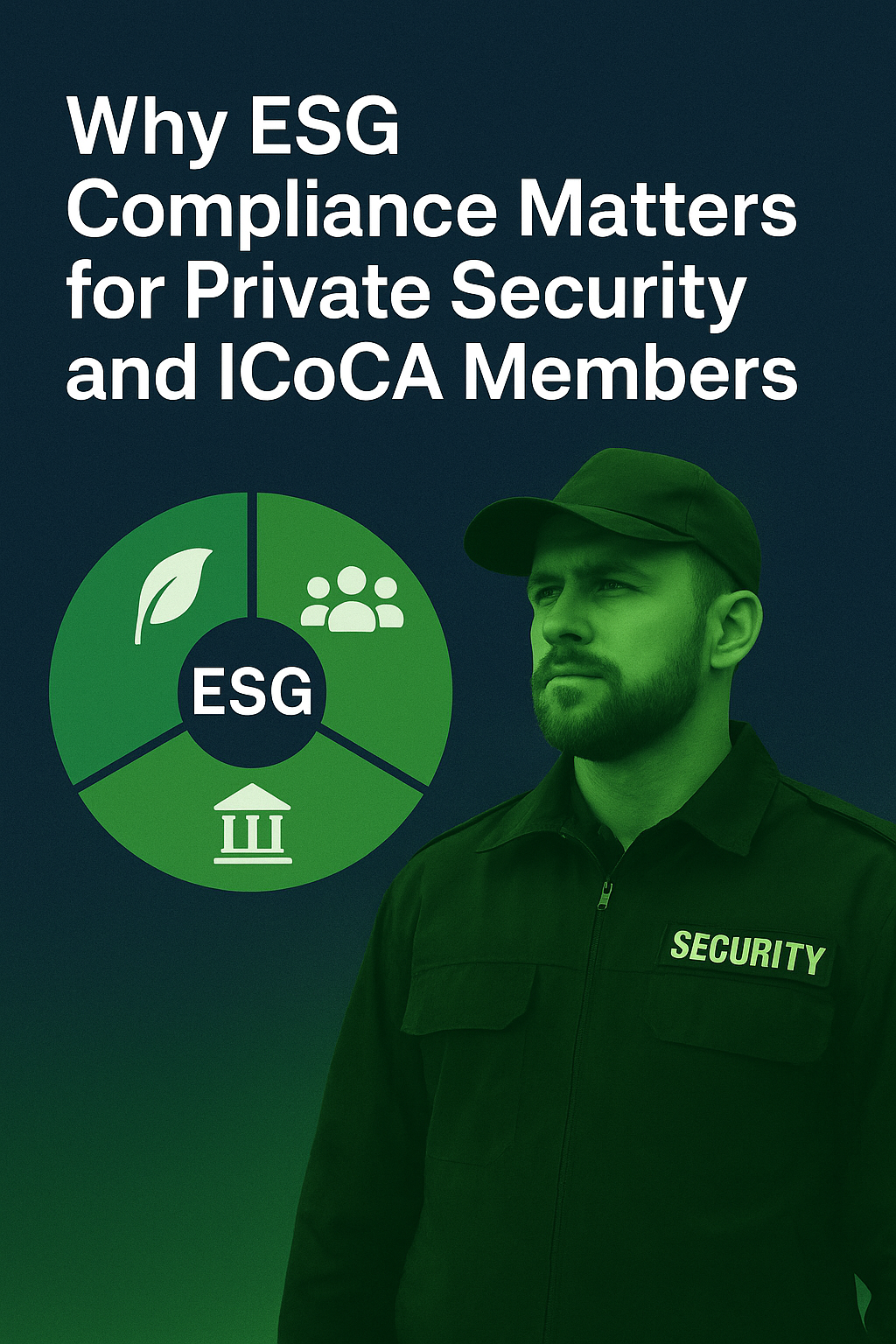
Why ESG Compliance Matters for Private Security and ICoCA Members?

In recent years, the private security industry has undergone a major transformation. Clients, regulators, and international organizations are no longer looking only at operational capability — they now expect companies to demonstrate ethical conduct, Human Rights, social responsibility, and environmental awareness. This is where Environmental, Social, and Governance (ESG) compliance becomes essential, especially for companies that are members of the International Code of Conduct Association (ICoCA).

1. ESG and ICoCA: Shared Principles of Responsible Conduct

The ICoCA Code of Conduct promotes respect for human rights, ethical business behavior, and accountability — values that align perfectly with ESG principles.

  • Environmental (E): Provide a healthy environment for employees, reducing pollution, managing waste responsibly, and minimizing carbon footprints in operations.
  • Social (S): Ensuring fair labor practices, protecting human rights, and engaging positively with local communities.
  • Governance (G): Upholding transparency, anti-corruption, and strong internal compliance systems.

For ICoCA members, adopting ESG practices reinforces their commitment to responsible operations and continuous improvement — turning principles into measurable action.

2. Meeting Client and Contractual Expectations

While ESG compliance may not yet be legally mandatory, it is rapidly becoming a contractual requirement for international clients.
Major organizations — including the UN, IFC, oil and gas operators, and NGOs — increasingly assess suppliers and contractors based on ESG performance.

For private security companies, having an ESG framework in place can mean the difference between winning or losing contracts. It demonstrates that the company operates ethically, manages its risks, and contributes to sustainable development goals.

3.Building Trust and Reputation

The private security sector operates in complex and often high-risk environments. Transparency and accountability are key to maintaining client confidence and public trust.

An independent ESG rating or compliance report provides tangible evidence of a company’s ethical and sustainable performance.

For ICoCA members, this further enhances credibility, showing that they not only follow the Code but go beyond it by measuring and reporting their impact.

4.Preparing for Future Regulations

Globally, governments and investors are moving toward mandatory sustainability reporting. By integrating ESG into their management systems today, ICoCA members can stay ahead of regulatory changes and ensure long-term operational resilience.

ESG compliance is not just about reputation — it’s about future-proofing the business and maintaining competitiveness in a rapidly changing global market.

5.From Compliance to Leadership

Ultimately, ESG compliance empowers private security companies to become leaders in responsible operations.
By aligning with ICoCA principles and adopting ESG frameworks, these companies demonstrate that security and sustainability can go hand in hand — protecting people, assets, and the planet.

In conclusion:

ESG compliance is no longer optional for private security companies — it is a strategic necessity. For ICoCA members, it reinforces the very principles they are built on: accountability, respect, and continuous improvement.

Those who embrace ESG today will not only meet tomorrow’s requirements but also build stronger, more trusted, and more sustainable organizations.


ISO consultancy services for private security companies

ISO Certification for Private Security Companies in Iraq

We help Iraqi security companies in Basrah, Erbil, and Baghdad achieve ISO 18788, PSC.1:2022, and ISO 9001 certifications with UKAS-accredited approval.

Get Free Consultation

Why Iraqi Security Companies Need ISO Certification

Win Contracts
Most oil & gas, construction, and government contracts in Iraq require certified security companies.
Credibility & Compliance
Demonstrate compliance with international security and risk management standards.
Trusted by Clients
Build trust with international companies operating in Iraq.

Our Consultancy Services in Iraq

✅ Gap Analysis & Documentation – Security manuals, SOPs, and policies aligned with ISO 18788, PSC.1:2022, and ISO 9001.
✅ Implementation Support – On-site and remote guidance in Basrah, Erbil, and Baghdad.
✅ Internal Audits – Ensure readiness before certification audits.
✅ Certification Body Support – Work with UKAS-accredited auditors until approval.
✅ Continuous Support – Training for staff and compliance updates for Iraqi regulations.

Why Iraqi Companies Choose Us

  • Specialized in private security consultancy in Iraq.
  • Experience with international certification bodies (BV, SGS, MSS Global).
  • Local presence in Basrah, Erbil, and Baghdad.
  • Full support until successful UKAS-accredited certification.

Success Stories from Iraq

“Our security company in Basrah achieved ISO 18788 and won new oilfield contracts. The consultancy team guided us perfectly.” – Security Firm, Basrah

“They helped us implement PSC.1:2022 in Erbil, and we passed certification with zero nonconformities.” – Private Security Company, Erbil

Contact Us in Iraq

Ready to certify your private security company?

📧 Email: ceo@perennialhse.com

📞 Iraq: +964 750 241 3431 | UAE: +971 55 853 0912

Book a Free Consultation

© 2025 Green Perennial Company | ISO & QHSE Consultancy in Iraq

What’s the most challenging part of complying with Health & Safety regulations as a small business?

How can you solve your HSE compliance as a small to medium-sized business?


For many businesses, the challenge lies in creating a safe workplace for employees and visitors, protecting the public and environment, while struggling with the cost of hiring a full-time HSE professional.

One of the best solutions is outsourcing your HSE performance to a private consultancy. This approach helps you:

  • Save the cost of employing a full-time HSE expert
  • Reduce incidents, injuries, and lost workdays
  • Protect company assets and reputation
  • Build trust with contractors and clients
  • Avoid penalties, legal issues, and lost contracts due to non-compliance

At Green Perennial, we help you design and maintain a safe workplace for your employees, visitors, and contractors. Our services cover workshops, manufacturing sites, warehouses, and offices.

We provide:

  • Employee training
  • Risk assessments and mitigation
  • Safe operating procedures tailored to your operations

If hiring a full-time HSE expert is not an option, our cost-effective services ensure compliance, improve your business reputation, and support long-term growth.

Contact Us for more Info: 


ceo@perennialhse.com

Iraq: +9647502413431

Dubai: +971558530912 

Learn More