Security Management system

Management system for private security operations

ISO Consultancy Services for private security operations  


We are glad to announce our new package for private security operations, which includes 3 international standards as below:

ISO 18788 is a management system for private security operations https://www.iso.org/standard/63380.html

ANSI/ASIS PSC1.2022 is an American standard for the quality of private security company operations

ISO 9001 is a quality management system (QMS).

This package provides:

  • A management system framework for private security operations.
  • The risk management framework for the conduct of security operations.
  • Quality assurance and quality control for the security organizations.

Read More

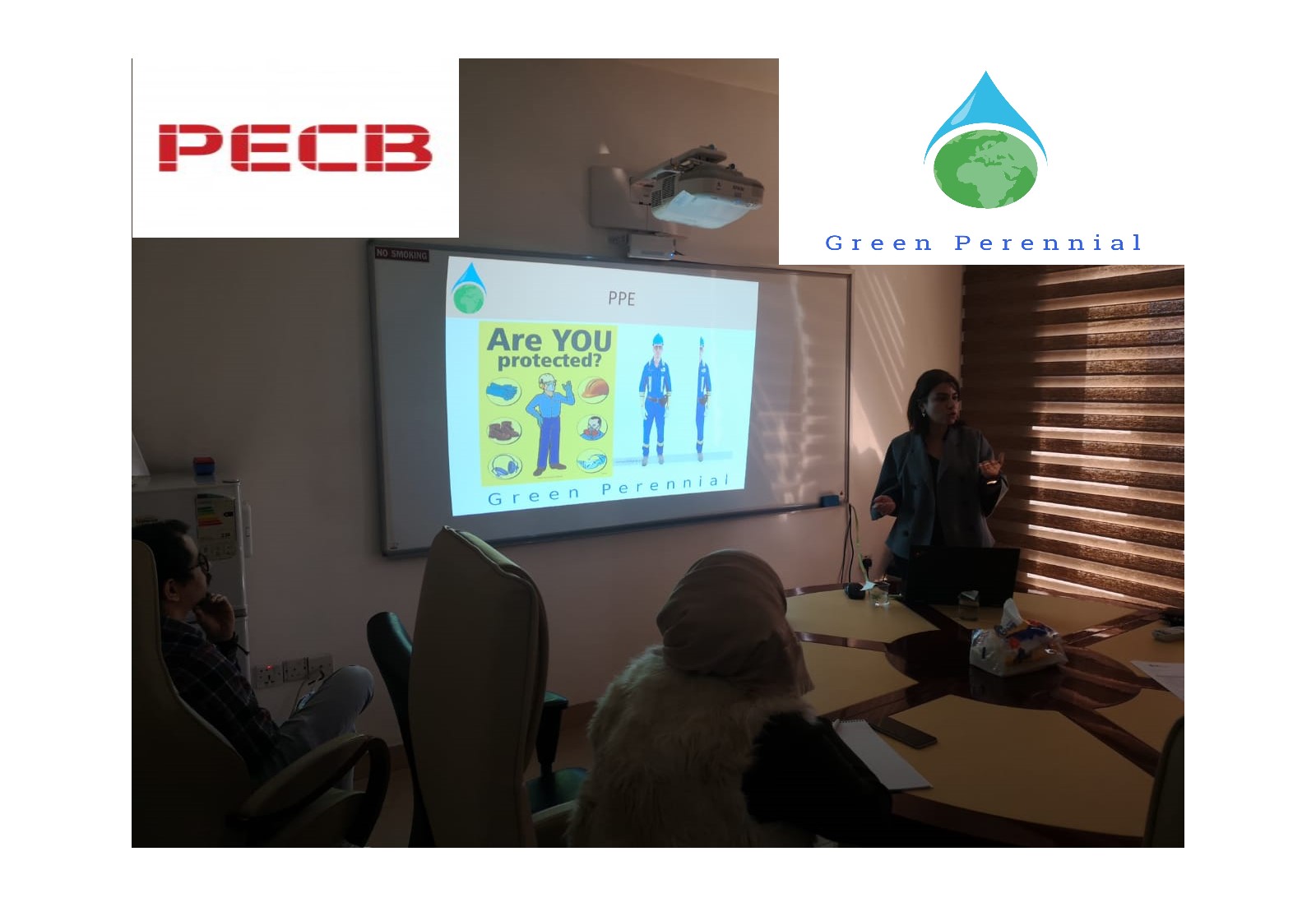
Training Partnership Agreement With PECB

We are glad to announce our partnership agreement with PECB.

About PECB;

PECB is a certification body which provides education and certification under ISO/IEC 17024 for individuals on a wide range of disciplines. As a global provider of training, examination, and certification services, PECB offers its expertise on multiple fields, including, but not limited to, Information Security, Privacy and Data Protection, Business Continuity, Quality and Service Management, Risk Management, Health and Safety, and Sustainability.  We help professionals show commitment and competence by providing them with valuable education, evaluation, and certification against internationally recognized standards. Our mission is to provide our clients with services that inspire trust, demonstrate competence, and benefit society as a whole. For further information about PECB’s principal objectives and activities, visit www.pecb.com

This partnership helps Green Perennial to bring global and high standards training courses to the Iraq community. I believe this partnership brings a lot of value to local organizations and Green Perennial is well positioned to provide  professional ISO standards training courses to the local community with the highest quality. This partnership opens a new market to the global trainer, and together we can bring benefit and value to the community.

 Reference: .https://pecb.com/en/newsDetail?nid=1821&lid=1

Project HSE Plan

How our project HSE plan brings benefit to your organization?

The process starts with the preparation of the health, safety, and environmental plan for the specific project which is included as below:

Description of the project,

Roles and responsibilities,

Policies

Survey and inspection

Hazards and Risk assessment

Incidents management

Emergency response planning

Training program

Lifting and hoisting plan

Personal protective equipment requirements

Permit to work system

Chemicals and hazardous material management

Waste management

Our HSE experts help you with the implementation of the plan on site.

This service helps contractors to operate safely with full compliance with international standards.

Proper HSE planning for the project and implementation of the plan demonstrate the proactive HSE management system. A safe system of work reduces the risk of incidents and improves operational efficiency.

The proactive HSE system saves costs and improves the business reputation.

What makes us different:

This service designed for the projects.

You can get the benefit from certified HSE experts.

It saves time and costs for hiring full-time HSE employee.

We support your projects, and we complied with your client’s HSE requirements.

Integrity and unconditional support is our core value.

Our HSE experts support your project. Contact us for more info: https://perennialhse.com/health-and-safety/


009647502413431

ceo@perennialhse.com

Recommendation about masks and COVID-19

Reference: WHO website

Masks can control transmission of virus and saved life. The use of masks alone is not sufficient for protection against COVID19. We should also maintain a minimum physical distance of at least 1 metre from others, frequently clean your hands and avoid touching your face and mask.

Type of masks

Medical masks (also known as surgical masks)

These are made from a minimum of three layers of synthetic nonwoven materials, and configured to have filtration layers sandwiched in the middle. These masks are available in different thicknesses, have various levels of fluid-resistance and two levels of filtration. These medical masks reduce the respiratory droplets from the wearer to others and to the environment. They also prevent transmission of the virus from others to the wearer.

Medical masks can protect people wearing the mask from getting infected, as well as can prevent those who have symptoms from spreading them. WHO recommends the following groups use medical masks.

  • Health workers
  • Anyone with symptoms suggestive of COVID-19, including people with mild symptoms 
  • People caring for suspect or confirmed cases of COVID-19 outside of health facilities

Medical masks are also recommended for these at-risk people, when they are in areas of widespread transmission and they cannot guarantee a distance of at least 1 metre from others:

  • People aged 60 or over
  • People of any age with underlying health conditions

When and how to use the masks

Respirators (also known as filtering facepiece respirators – FFP) and available at different performance levels such as FFP2, FFP3, N95, N99): these are specifically designed for healthcare workers who provide care to COVID-19 patients in settings and areas where aerosol generating procedures are undertaken. Healthcare workers should be fit tested before using a respirator to ensure that they are wearing the correct size.

Non-medical masks (also known as fabric masks, home-made masks, DIY masks) can act as a barrier to prevent the spread of the virus from the wearer to others.

They can be purchased commercially or handmade, and are generally not standardized like medical masks. There are numerous types of fabric masks, they should cover the nose, mouth, and chin and be secured with elastic loops or ties, include multiple layers, be washable and reusable.

Remember, the use of a fabric mask alone is not sufficient to provide an adequate level of protection. Maintain a minimum physical distance of at least 1 metre from others, frequently clean your hands and continue to avoid touching your face and the mask.

WHO will be referring to non-medical masks as fabric masks.

Non-medical, fabric masks are being used by many people in public areas, but there has been limited evidence on their effectiveness and WHO does not recommend their widespread use among the public for control of COVID-19. However, for areas of widespread transmission, with limited capacity for implementing control measures and especially in settings where physical distancing of at least 1 metre is not possible – such as on public transport, in shops or in other confined or crowded environments – WHO advises governments to encourage the general public to use non-medical fabric masks.

Contact us today for health and safety consulting services:

009647502413431